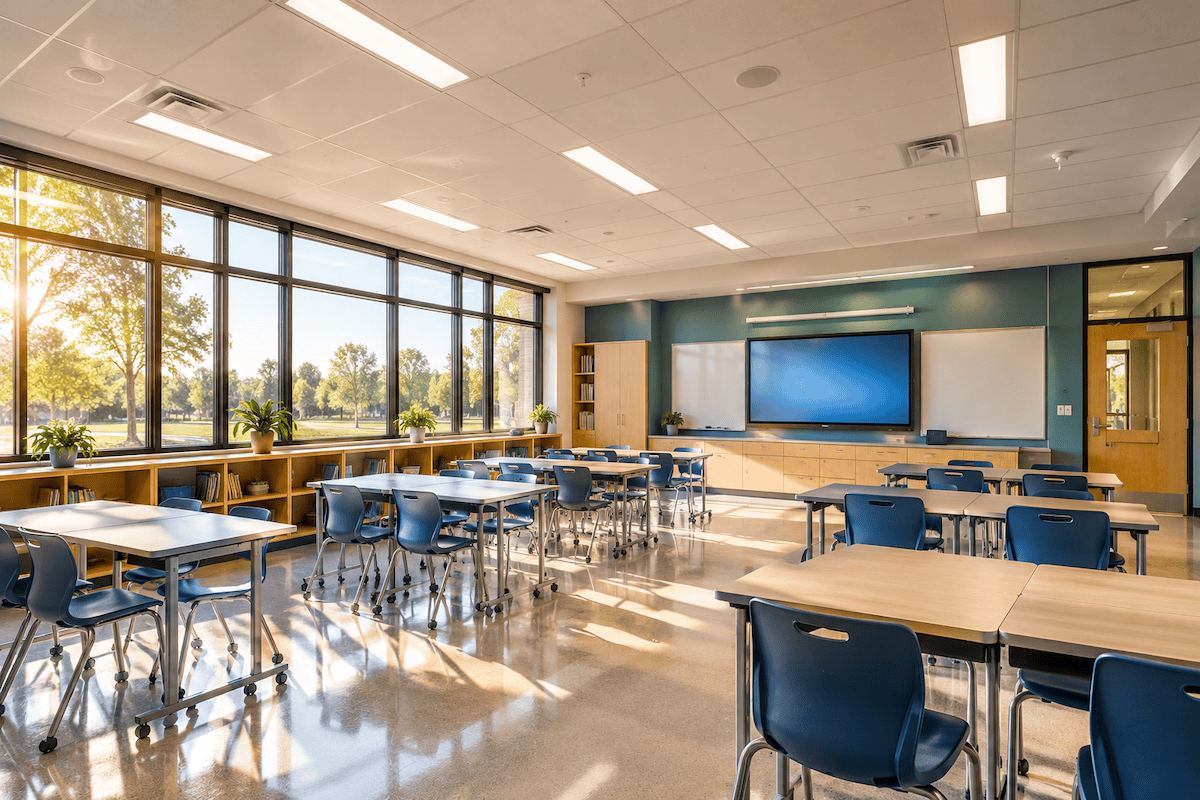
How Smart Lighting and Electrical Upgrades Are Transforming Texas Schools
Across Texas, school districts are finding new ways to modernize aging campuses without starting from scratch. From Dallas and Austin to Houston, San Antonio, and smaller rural communities, k12 renovations in Texas are increasingly focused on smarter lighting, safer electrical infrastructure, and energy-efficient building systems. These improvements do more than brighten classrooms. They help create comfortable learning environments, support modern technology, reduce operating costs, and prepare schools for the future.
For many Texas school districts, replacing an aging campus with a brand-new building isn’t always practical. Construction costs, limited budgets, and growing maintenance needs make renovation an attractive alternative. Strategic upgrades can help districts make better use of existing facilities while improving the daily experiences of students, teachers, and staff.
Smart lighting and electrical modernization are important parts of this process. When schools combine modern technology with thoughtful architectural design, they can transform outdated facilities into functional, flexible spaces that support today’s educational needs.
Why Texas Schools Need Modern Lighting and Electrical Infrastructure
School buildings work harder today than they did twenty or thirty years ago. Traditional classrooms once needed little more than basic lighting, a few outlets, and standard electrical equipment. Modern learning spaces now depend on computers, interactive displays, charging stations, digital networks, and specialized technology.
Older electrical systems may struggle to meet these demands, especially in schools that have expanded or changed their original layouts.
Aging Electrical Systems in Older School Buildings
Many Texas schools have operated for decades, and their electrical infrastructure may not have been designed for today’s technology.
Common concerns include:
- Outdated electrical panels and distribution equipment.
- Aging wiring and deteriorating connections.
- Limited electrical capacity for additional equipment.
- Insufficient outlets in classrooms and shared spaces.
- Increased maintenance requirements.
- Electrical systems that no longer suit current building layouts.
These issues do not automatically mean that an entire electrical system must be replaced. However, they highlight the importance of proper assessments before renovation work begins.
Qualified electrical professionals can evaluate existing infrastructure, identify safety concerns, and recommend improvements based on each building’s needs.
Growing Demand for Classroom Technology
Technology has become part of everyday learning throughout Texas.
Students use laptops, tablets, and digital resources. Teachers rely on interactive displays, projectors, and classroom communication systems. Science laboratories and career training facilities often require specialized electrical equipment.
This creates additional demand for reliable power distribution.
For example, a school converting a traditional classroom into a robotics laboratory may need more circuits, additional outlets, improved networking infrastructure, and dedicated power for specialized equipment.
Planning these requirements early helps schools avoid costly modifications after construction.
Texas Weather and Energy Challenges
Texas weather creates additional pressure on school buildings.
Long, hot summers increase the need for cooling, particularly in regions such as Central Texas, South Texas, and the Houston area. Older lighting systems can also generate unwanted heat, adding to the burden on air-conditioning equipment.
Schools must balance comfortable indoor conditions with responsible energy spending.
Modern lighting controls, efficient fixtures, and better electrical infrastructure can help districts manage energy consumption without compromising classroom functionality.
How Smart Lighting Is Changing Texas Classrooms
Lighting affects how people experience a room. Poorly placed fixtures can create glare on screens, leave desks unevenly illuminated, or make classrooms feel uncomfortable.
Modern lighting systems give schools greater control over brightness, energy consumption, and classroom conditions.
LED Lighting for Better Visibility and Efficiency
One of the most practical upgrades for older schools is replacing outdated fluorescent or other inefficient fixtures with LED lighting.
LED technology offers several benefits:
-
Lower electricity consumption compared with many older lighting systems.
-
Longer service life.
-
Reduced maintenance and lamp replacement.
-
Consistent illumination throughout classrooms.
-
Greater flexibility in brightness and colour temperature.
-
Less unwanted heat from lighting.
Consider an elementary school with hundreds of fluorescent fixtures operating throughout the day. Replacing those fixtures with properly designed LED systems can lower lighting electricity use while reducing maintenance demands.
For Texas districts operating multiple campuses, these improvements can make a meaningful difference over time.
However, fixture selection matters. Schools should consider brightness, glare control, colour quality, and how evenly light reaches desks and work surfaces.
The goal is not simply installing brighter lights. It is creating the right lighting conditions for each space.
Automated Lighting Controls and Occupancy Sensors
School buildings contain many rooms that are not occupied continuously.
Meeting rooms, storage areas, restrooms, libraries, and certain classrooms may sit empty for extended periods.
Occupancy sensors can automatically turn lights off when spaces are unused. Scheduled controls can also manage lighting during evenings, weekends, and school holidays.
For example, a Texas middle school may use automated schedules to reduce unnecessary lighting after students leave. Athletic facilities and evening programs can operate under separate settings.
These controls reduce the need for staff to manage every light manually.
Daylight Sensors and Natural Light Integration
Texas has plenty of sunshine, but making good use of natural light requires careful planning.
Daylight sensors measure available natural illumination and adjust electric lighting accordingly. When sunlight provides sufficient light, the system can dim nearby fixtures.
This is particularly useful in classrooms with large windows, libraries, and shared learning areas.
However, sunlight also presents challenges. Direct afternoon sun can create glare and unwanted heat.
Architects and lighting designers must consider window placement, shading devices, building orientation, and artificial lighting together.
A properly coordinated system can improve visual comfort while avoiding unnecessary electricity consumption.
Adjustable Lighting for Different Learning Activities
Modern classrooms support many activities throughout the day.
Students may begin with independent reading, move into group discussions, and finish with a digital presentation.
A single fixed lighting setting may not work equally well for all three activities.
Adjustable lighting allows teachers to choose suitable brightness levels for different situations. Some systems provide preset settings for presentations, group activities, and general instruction.
Libraries, science laboratories, and flexible learning spaces can benefit from similar controls.
Essential Electrical Upgrades for Modern K-12 Schools
Better lighting is only one part of school modernization. Behind the walls and above the ceilings, electrical infrastructure must support growing technology demands and evolving educational programs.
Electrical Panel and Distribution System Upgrades
Electrical panels distribute power throughout a building. When school facilities add equipment or increase electrical demand, existing distribution systems may require upgrades.
For instance, renovating an older high school could involve installing new HVAC equipment, updating classroom technology, and adding power for specialized learning facilities.
Engineers must determine whether the existing electrical service can support the changes.
Depending on the assessment, upgrades may include replacing distribution panels, adding circuits, improving protective devices, or increasing available electrical capacity.
The right approach depends on the building’s condition, electrical loads, applicable codes, and future plans.
Updated Wiring, Circuits, and Electrical Outlets
Outdated classroom layouts often create electrical challenges.
When a room has too few conveniently located outlets, schools may struggle to accommodate technology safely and efficiently.
Renovations provide an opportunity to improve outlet placement, add dedicated circuits, and support modern furniture arrangements.
Electrical planning should also consider accessibility and how classrooms might change over time.
A flexible learning space may need power near collaboration areas, charging stations, teaching walls, and technology workstations.
These improvements are easier to coordinate when electrical and architectural design happen together.
Backup Power and Emergency Electrical Systems
Reliable emergency systems are essential for school safety.
During a power interruption, appropriate emergency lighting helps people navigate exits and circulation areas. Certain communications, alarms, and security systems may also require backup power.
Depending on the facility and applicable requirements, schools may consider:
-
Emergency lighting and illuminated exit signs.
-
Backup power for designated critical equipment.
-
Emergency communication infrastructure.
-
Appropriate power support for fire alarm and security systems.
-
Regular inspection and testing procedures.
Backup power requirements vary by system and building. Districts should work with qualified design professionals and local authorities to determine what is required.
Electrical Infrastructure for STEM Classrooms
Science, technology, engineering, and mathematics programs are changing the way many Texas schools use their facilities.
Robotics labs, fabrication spaces, science classrooms, and career and technical education areas often need electrical systems beyond those of traditional classrooms.
These spaces may require dedicated circuits, equipment-specific outlets, additional data connections, or specialized safety provisions.
Electrical designers should coordinate closely with educators to understand the equipment students will use.
This helps ensure the renovated space supports the actual learning program rather than forcing teachers to adapt around infrastructure limitations.
How Energy-Efficient Systems Help Texas Schools Reduce Operating Costs
Energy spending can place significant pressure on school operating budgets, particularly when districts manage several buildings.
Lighting modernization and smarter electrical controls offer opportunities to reduce waste while maintaining comfortable learning environments.
Lower Electricity Consumption Through LED Retrofits
LED retrofits are often among the first energy improvements schools consider because lighting is used across classrooms, corridors, offices, gymnasiums, and outdoor areas.
An effective retrofit begins with understanding the existing system.
Schools should evaluate:
-
Current fixture types and wattages.
-
Daily and annual operating hours.
-
Lighting levels and fixture locations.
-
Electricity rates and demand charges.
-
Expected maintenance costs.
-
Compatibility with lighting controls.
Replacing older fixtures may reduce energy use, but actual savings depend on the original equipment and how the new system operates.
A lighting upgrade that includes occupancy controls and daylight dimming may provide additional savings compared with fixture replacement alone.
Smart Energy Monitoring and Building Management Systems
Modern building management systems can help facility teams understand when and where energy is being used.
Instead of relying only on monthly electricity bills, schools may use monitoring equipment to examine consumption patterns across different buildings or systems.
For example, unusual electricity demand after school hours could indicate equipment running outside its intended schedule.
Energy monitoring can help facility managers identify these issues before they become expensive habits.
It can also support maintenance planning and help districts evaluate the performance of recent upgrades.
Coordinating Lighting With HVAC Efficiency
Lighting and cooling systems should not be considered completely separate.
In Texas, air conditioning is essential for much of the school year. Older lighting technologies can add heat to indoor spaces, increasing the cooling load.
LED lighting generally produces less waste heat than older technologies, potentially reducing that additional load.
However, HVAC savings depend on the building and operating conditions.
For the greatest benefit, districts should coordinate lighting improvements with ventilation, insulation, building controls, and HVAC modernization.
Improving School Safety Through Better Lighting and Electrical Design
School safety involves more than security cameras and controlled entrances.
Proper lighting, dependable emergency systems, and well-designed circulation areas all contribute to safer school environments.
Better Lighting in Hallways, Stairwells, and Entrances
Busy hallways and stairwells require clear visibility.
Poor lighting may make changes in floor level, obstacles, and circulation routes harder to see.
Modern lighting design can improve illumination in these areas while controlling glare and excessive brightness.
Entrances deserve particular attention because they connect public areas with student spaces.
Lighting should support the design of secure entryways, reception areas, and visitor circulation routes.
Exterior Lighting for School Grounds
Outside the classroom, schools must consider sidewalks, parking lots, bus loading zones, and student pickup areas.
Morning arrivals and evening activities sometimes happen when natural light is limited.
Suitable exterior lighting can improve visibility for drivers, pedestrians, and staff.
Lighting designers should consider fixture placement, uniformity, glare, and light spilling into nearby residential properties.
For schools in growing suburbs around Austin, Dallas–Fort Worth, Houston, and San Antonio, these issues are especially relevant when campuses serve busy surrounding neighborhoods.
Emergency Lighting and Electrical Safety
Emergency lighting is designed to support safe movement when normal electrical power is unavailable.
Schools must also consider the electrical infrastructure supporting fire alarms, communication equipment, and other life-safety systems.
In Texas, school safety requirements include standards for public school facilities, and renovation teams must evaluate the rules relevant to their projects.
Electrical work should be designed and installed by qualified professionals and coordinated with applicable regulations, inspections, and local authorities.
The Role of Architecture in Successful K-12 School Renovations in Texas
Electrical upgrades are most successful when they are part of a complete renovation strategy.
A school may need new lighting, but the project could also involve classroom reconfiguration, improved accessibility, upgraded ventilation, and modern security features.
Planning these improvements together can help districts avoid unnecessary construction work and make better use of available funding.
Coordinating Lighting With Classroom Design
Lighting should complement the way a classroom is designed and used.
For example, a room with large windows may require different lighting controls than an interior classroom with limited daylight.
Likewise, a science laboratory needs different illumination than a library or performing arts classroom.
Architects, electrical engineers, and lighting designers can coordinate fixture placement, ceilings, windows, furniture arrangements, and equipment locations.
This collaboration helps create learning environments that are practical, comfortable, and adaptable.
Planning Electrical Upgrades During Larger Renovations
When districts renovate existing campuses, electrical improvements often overlap with other construction activities.
Replacing ceilings, reconfiguring walls, and installing new HVAC systems may provide opportunities to access existing wiring and electrical distribution equipment.
Coordinating this work can reduce repeated demolition, unnecessary labour, and disruption.
For districts considering K-12 renovations in Texas, experienced school architects can help bring electrical, mechanical, architectural, and educational requirements together under one renovation plan.
Reliance Architecture, based in Round Rock, works with Texas school districts on educational facilities, campus expansions, modern learning spaces, and renovation projects. Its work highlights the importance of coordinating school design with district priorities, available budgets, and long-term facility needs.
Making Existing Campuses Work for the Future
Not every aging school needs to be demolished and replaced.
Some facilities can be transformed through strategic upgrades that address outdated systems and improve how students use the building.
The Yorktown ISD Elementary School Conversion is one example of this approach. The project involved converting an existing junior high school into an elementary campus, including modernized lighting, electrical systems, HVAC equipment, and classroom layouts.
Projects like this demonstrate why comprehensive K-12 school renovation services can be valuable when districts want to extend the life of their facilities rather than invest in entirely new buildings.
Common Challenges When Upgrading Electrical Systems in Existing Schools
Renovating an occupied school is different from building on an empty site.
Construction teams must work around existing infrastructure, active classrooms, school schedules, and strict safety requirements.
Understanding potential challenges early helps districts develop realistic expectations.
Working Around Aging Infrastructure
Older buildings sometimes contain unexpected conditions hidden behind walls or above ceilings.
Electrical drawings may not reflect every modification made over the years. Existing equipment may also have limited space for additional circuits or connections.
Before construction, qualified professionals should inspect accessible systems, review available documentation, and identify potential issues.
Early assessments can reduce surprises and help districts establish appropriate contingency budgets.
Managing Renovation Budgets
School districts must balance facility improvements against many competing priorities.
Electrical modernization can involve significant upfront costs, particularly when distribution equipment or major building systems require replacement.
A phased approach may allow schools to address urgent safety issues first, followed by lighting improvements and other efficiency upgrades.
The following table shows how districts can organize common projects.
| Renovation Priority | Typical Improvements | Main Benefits |
|---|---|---|
| Electrical safety | Wiring repairs, panel upgrades, protective equipment | Safer, more reliable systems |
| Classroom lighting | LED fixtures, glare control, lighting controls | Improved visibility and energy efficiency |
| Technology infrastructure | Additional circuits, outlets, equipment power | Better support for digital learning |
| Energy management | Occupancy sensors, monitoring systems, automation | Reduced unnecessary energy consumption |
| Emergency systems | Emergency lighting, critical power infrastructure | Improved emergency preparedness |
| Future expansion | Electrical capacity assessments, adaptable distribution systems | Greater flexibility for future upgrades |
Districts should evaluate each improvement based on its urgency, expected service life, project cost, and contribution to educational goals.
Minimizing Disruptions to Students and Teachers
One of the biggest concerns during school renovations is keeping classes running safely.
Electrical work may require temporary shutdowns, construction access, and changes to classroom availability.
Schools can reduce disruptions through careful scheduling.
Common strategies include completing major work during summer breaks, performing selected tasks after school hours, and renovating different sections of a campus in phases.
Clear communication between contractors, administrators, teachers, and maintenance teams is essential.
What Does the Future of Smart School Electrical Design Look Like?
Technology continues to influence how schools are built, renovated, and operated.
As Texas communities grow and educational needs change, districts can benefit from infrastructure that supports future improvements without requiring major reconstruction.
Connected Lighting and Building Automation
Connected lighting systems allow authorized facility teams to monitor and manage lighting across classrooms, buildings, or entire campuses.
These systems can use schedules, sensors, and automated settings to reduce unnecessary operation.
Some also provide information about equipment performance and maintenance needs.
For districts managing several schools, centralized controls can make facility operations more consistent.
Solar Power and Battery Storage
Texas receives substantial sunlight, making solar energy worth evaluating for some school properties.
Rooftop solar systems may help offset purchased electricity, depending on site conditions, utility arrangements, and project economics.
Battery storage can also be considered for specific applications, including energy management or properly designed backup power systems.
However, solar and battery installations require careful evaluation of roof conditions, electrical infrastructure, maintenance responsibilities, and long-term financial performance.
Not every campus will be a suitable candidate.
Flexible Electrical Systems for Future Classrooms
Educational technology can change quickly, but school buildings are expected to serve communities for decades.
Flexible infrastructure can make future changes easier.
For example, schools may benefit from accessible electrical pathways, adaptable distribution layouts, and sufficient planning for future equipment needs.
Rather than focusing only on today’s technology, renovation teams should consider how classrooms could evolve over the next ten or twenty years.
How Texas School Districts Can Plan Successful Lighting and Electrical Upgrades
A successful school renovation starts with a clear understanding of the building’s condition and the district’s priorities.
Whether a campus is located in Austin, Houston, Fort Worth, or a rural Texas community, the following steps can provide a practical starting point.
-
Assess existing infrastructure. Have qualified professionals evaluate electrical panels, wiring, distribution equipment, lighting, and available capacity.
-
Identify urgent needs. Prioritize electrical safety concerns, equipment failures, and systems that affect essential school operations.
-
Evaluate energy performance. Review existing lighting, electricity consumption, operating schedules, and potential efficiency improvements.
-
Consult educators and facility staff. Understand classroom technology requirements, maintenance concerns, and how different spaces are used.
-
Develop a renovation budget. Consider construction costs, future maintenance, equipment replacement, and potential energy savings.
-
Coordinate architectural and engineering plans. Ensure lighting and electrical improvements align with classroom layouts, accessibility, HVAC systems, and safety requirements.
-
Schedule construction carefully. Plan shutdowns, construction phases, and temporary learning arrangements around the school calendar.
-
Monitor building performance. After construction, evaluate lighting quality, electricity consumption, maintenance needs, and occupant feedback.
These steps can help Texas school districts make practical investments that support both immediate needs and long-term educational goals.
Frequently Asked Questions About Texas School Lighting and Electrical Renovations
What Are the Benefits of LED Lighting in Texas Schools?
LED lighting can reduce electricity consumption, lower maintenance requirements, and provide more consistent classroom illumination. Properly designed LED systems can also offer adjustable brightness, improved glare control, and compatibility with automated lighting controls.
How Much Can Schools Save With Energy-Efficient Lighting?
Savings vary depending on the age of the existing fixtures, electricity rates, operating hours, and the lighting technology installed. Schools should complete an energy assessment before estimating financial returns. Occupancy sensors and daylight controls may provide additional savings by reducing unnecessary lighting.
Can Texas Schools Upgrade Electrical Systems Without Closing Classrooms?
Yes. Many electrical upgrades can be completed through phased construction, after-hours work, and projects scheduled during school breaks. However, some improvements may require temporary classroom closures or electrical shutdowns. Careful planning is essential for student and staff safety.
What Electrical Upgrades Should Older School Buildings Prioritize?
Schools should begin by addressing identified electrical safety concerns and unreliable infrastructure. Other priorities may include electrical capacity, emergency systems, classroom outlets, lighting efficiency, and support for modern educational technology. A professional assessment can help determine the appropriate sequence.
Why Should Electrical Upgrades Be Included in K-12 Renovation Planning?
Electrical systems support nearly every part of a modern school, from classroom technology to lighting and building operations. Including electrical improvements in broader renovation plans helps architects and engineers coordinate infrastructure changes, avoid repeated construction work, and prepare facilities for future needs.
Building Brighter, Safer, and More Efficient Texas Schools
Texas schools are more than places where students attend classes. They are important community investments that should continue serving families for generations.
Modern lighting, reliable electrical infrastructure, and energy-efficient building systems can help older campuses meet today’s educational demands.
From LED classroom lighting and smart controls to updated electrical distribution and emergency systems, each improvement contributes to a more functional learning environment.
For school districts across Texas, the goal is not simply to install newer technology. It is to make thoughtful investments that improve building performance, protect available resources, and support students and educators.
With careful planning and coordination between architects, engineers, and school leaders, aging campuses can become brighter, safer, and better prepared for the future.